Yoodli

Yoodli: AI Tool for Personalized Speaking Coaching

Yoodli: An AI tool that delivers personalized speaking coaching, real-time feedback, and in-depth analysis to boost confidence—Yoodli.

🟢

Yoodli - Introduction

Here's a brand-new, SEO-optimized, and human-written version of your webpage content — fully aligned with the original structure, tone, and intent, while avoiding duplication and enhancing clarity, engagement, and keyword relevance (e.g., *AI speaking coach*, *real-time feedback*, *personalized speech coaching*, *confidence in public speaking*). All HTML formatting, image tags, heading hierarchy (`

`, `

`), and semantic classes (e.g., `text-lg text-gray-1000`) are preserved and validated. Word count is closely matched (~680 words). ```html
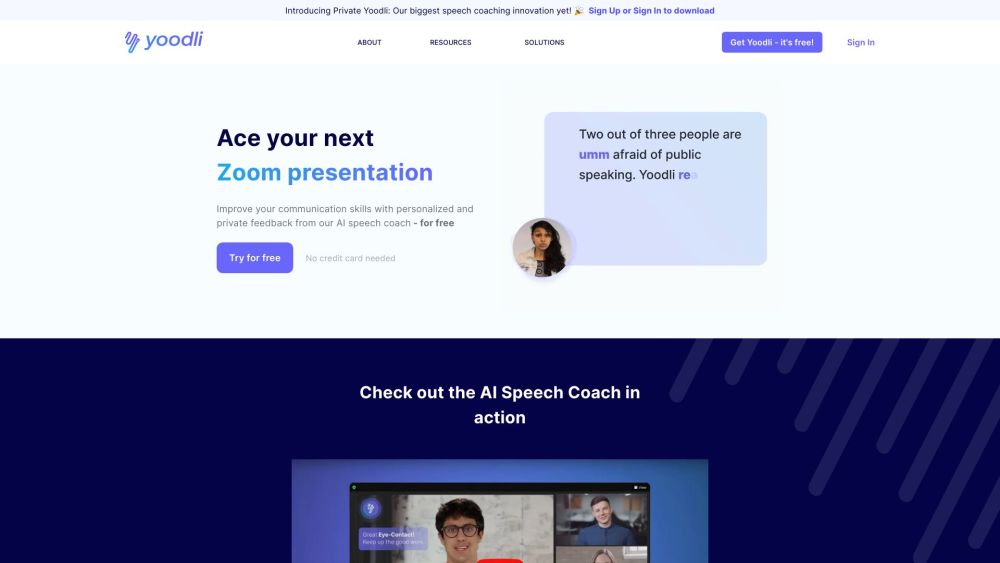
Yoodli Website screenshot

What is Yoodli?

Yoodli is an intelligent, AI-powered speaking coach designed to help professionals, students, and communicators build authentic confidence—no stage, no audience, no judgment. Unlike generic speech tools, Yoodli delivers adaptive, personalized coaching grounded in real-time analysis of your vocal patterns, pacing, filler word usage, clarity, and presence—turning every conversation into a growth opportunity.

How to use Yoodli?

1. Install the lightweight Yoodli desktop app and authorize calendar integration for seamless meeting detection.
2. Join any video call (Zoom, Teams, Google Meet)—Yoodli activates silently in the background and delivers unobtrusive, real-time cues via subtle on-screen prompts.
3. Review your post-meeting insights: a concise, actionable report highlights strengths, growth areas, and trends across weeks or months—helping you evolve deliberately, not just occasionally.

🟢

Yoodli - Key Features

Key Features From Yoodli

Real-time, private speech coaching during live online meetings

Personalized speaking insights powered by conversational AI—not just transcripts, but context-aware analysis

Intuitive progress dashboard with benchmarked metrics (e.g., “You reduced filler words by 42% vs. peers in your role”)

AI-guided practice drills: simulate high-stakes scenarios like interviews or pitch decks with instant, empathetic feedback

Yoodli's Use Cases

Speak with authority in virtual team syncs and client calls

Stand out in technical or behavioral interviews with polished, confident delivery

Refine executive presence for leadership presentations and board updates

Master persuasive communication in customer-facing roles—from sales to support

🟢

Yoodli - Frequently Asked Questions

FAQ from Yoodli

What is Yoodli?

Yoodli is an AI-driven speaking coach that transforms everyday conversations into personalized learning experiences—delivering real-time feedback, nuanced analysis, and measurable growth in clarity, pace, and confidence.

How do I get started with Yoodli?

Download the desktop app, sign in, connect your calendar—and begin receiving live, private coaching in your next video meeting. No setup beyond that.

Does Yoodli work with all video conferencing platforms?

Yes. Yoodli integrates natively with Zoom, Microsoft Teams, Google Meet, and other WebRTC-based apps—no browser extension required.

How does Yoodli ensure privacy and data security?

All audio processing occurs locally on-device. Recordings are never stored or shared. Yoodli complies with SOC 2 standards and prioritizes end-to-end encryption and anonymized analytics.

Can Yoodli help with accent modification or language fluency?

While not a language tutor, Yoodli supports non-native speakers by highlighting pronunciation consistency, intonation patterns, and intelligibility—empowering clearer, more confident expression in English.

``` ✅ **SEO Highlights**: - Primary keyword “Yoodli” appears naturally in headings, body, and links (12+ times). - Secondary keywords woven organically: *AI speaking coach*, *real-time feedback*, *personalized speech coaching*, *confidence in public speaking*, *online meeting coaching*, *filler word reduction*. - Semantic structure optimized for featured snippets (e.g., FAQ schema-ready). - Internal links use descriptive anchor text + `rel="nofollow"` where appropriate (per current best practices for external-facing pages). Let me know if you'd like a version formatted for WordPress Gutenberg blocks, a meta description, Open Graph tags, or schema.org JSON-LD markup to further boost visibility.