RSIP Vision

RSIP Vision: AI Tool for Medical Imaging

RSIP Vision: AI tool for medical image analysis—pioneering AI-powered diagnostics and precision imaging solutions. Product Name.

🟢

RSIP Vision - Introduction

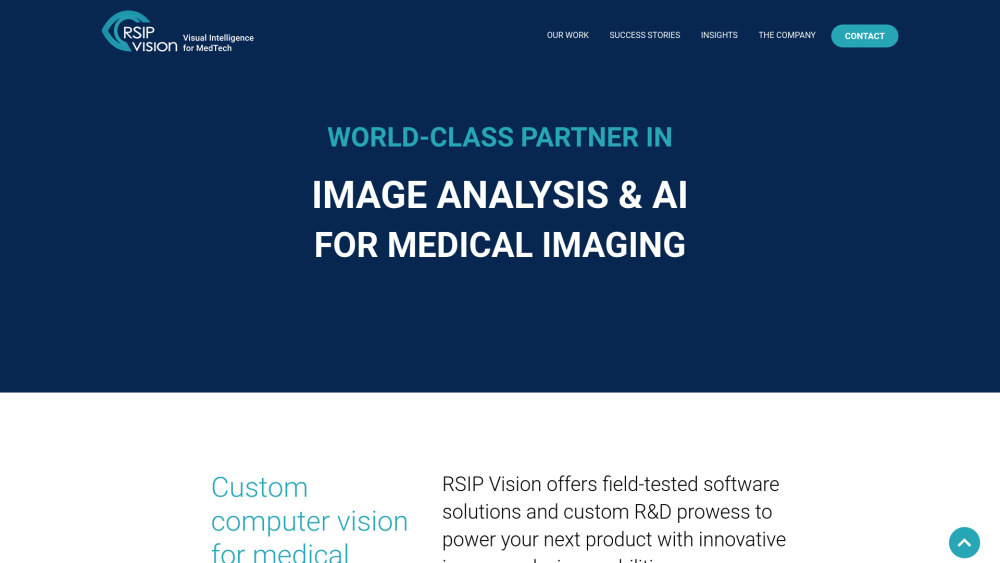
RSIP Vision Website screenshot

What is RSIP Vision?

RSIP Vision is a globally recognized leader in AI-driven medical imaging—designing intelligent, regulatory-ready software solutions that transform raw medical images into actionable clinical insights. With deep expertise in deep learning, computer vision, and FDA-aligned development practices, RSIP Vision empowers medtech innovators to embed precision diagnostics directly into imaging devices and clinical workflows.

How to use RSIP Vision?

Integrate RSIP Vision's modular AI engines—whether as embedded SDKs, cloud-based APIs, or co-developed custom modules—to accelerate time-to-market for next-generation diagnostic tools. Their end-to-end support spans algorithm design, clinical validation, regulatory documentation, and seamless integration into existing hardware and software platforms.

🟢

RSIP Vision - Key Features

Key Features From RSIP Vision

Regulatory-grade AI models for Class II/III medical devices

Modular, interoperable imaging AI components (DICOM, ultrasound, MRI, CT, endoscopy)

Clinical workflow optimization—from acquisition to interpretation

RSIP Vision's Use Cases

Enabling real-time cardiac function quantification across echocardiography and cardiac MRI

Automating bone segmentation and implant alignment in orthopedic planning

Detecting early mucosal anomalies in colonoscopy and upper GI endoscopy

Differentiating benign vs. malignant pulmonary nodules with explainable AI

Supporting minimally invasive navigation in ENT, urologic, and ophthalmic robotic surgery

  • RSIP Vision Support Email & Customer Service Contact & Refund Policy

    For technical assistance, licensing inquiries, or support requests: [email protected]. Full contact details and service terms are available on the official Contact Us page.

  • RSIP Vision Company

    Founded in Israel and operating worldwide, RSIP Vision is an AI-first medical imaging R&D partner—trusted by Fortune 500 medtech firms and digital health startups alike. Learn more about their mission, team, and clinical impact at About Us.

  • RSIP Vision Facebook

    Stay updated with industry insights and product milestones: facebook.com/RSIPvision

  • RSIP Vision YouTube

    Watch technical demos, clinical case studies, and AI implementation walkthroughs: youtube.com/c/Rsipvision

  • RSIP Vision LinkedIn

    Connect with RSIP Vision’s engineering and clinical AI experts: linkedin.com/company/rsip-vision

  • RSIP Vision X (formerly Twitter)

    Follow real-time updates on AI in radiology, regulatory trends, and healthcare innovation: twitter.com/RSIPvision

🟢

RSIP Vision - Frequently Asked Questions

FAQ from RSIP Vision

What is RSIP Vision?

RSIP Vision is a specialized AI engineering firm focused exclusively on medical imaging—delivering production-grade, clinically validated computer vision algorithms that help manufacturers build smarter, safer, and more accurate diagnostic and therapeutic devices.

How to use RSIP Vision?

Whether you're developing a new ultrasound platform, upgrading a surgical navigation system, or launching an AI-powered screening app, RSIP Vision collaborates as your embedded AI partner—from prototyping and algorithm training to regulatory submission support and post-market performance monitoring.

What fields does RSIP Vision specialize in?

RSIP Vision delivers domain-specific AI across cardiology, orthopedics, gastroenterology, pulmonology, neurology, oncology, and surgical specialties—including cross-modality applications spanning MRI, CT, X-ray, ultrasound, endoscopy, and optical coherence tomography (OCT).

How can RSIP Vision help in product development?

By providing turnkey AI components or co-engineering bespoke solutions, RSIP Vision reduces R&D risk and accelerates FDA/CE clearance—ensuring robustness, interpretability, and clinical relevance at every stage of the medical device lifecycle.