AI Bible Verse Studies: An AI Tool for Studying the Bible
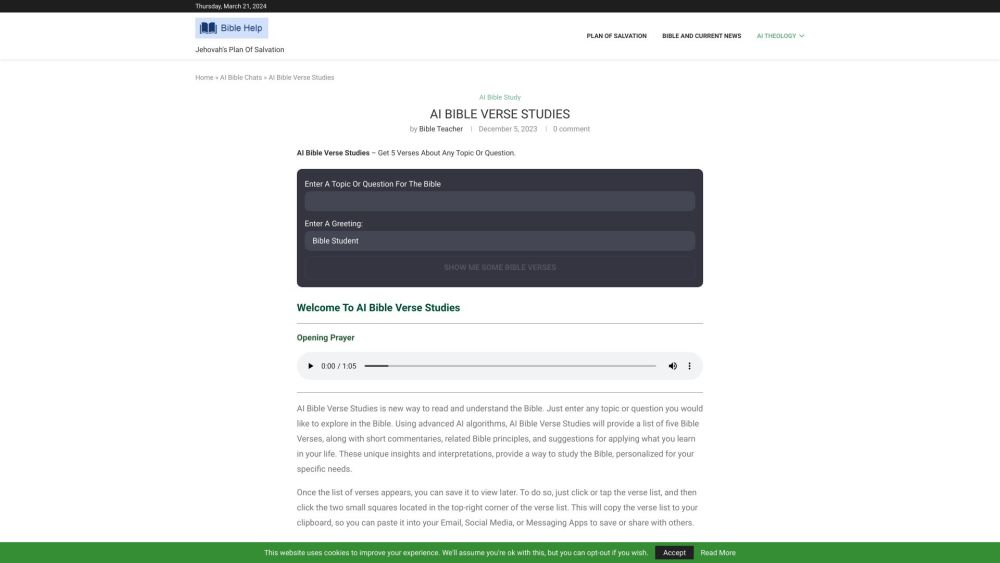
What is AI Bible Verse Studies?
AI Bible Verse Studies is an online tool that turns a topic or question into a short Bible study. Enter what you want to explore, and the tool gathers five related Bible verses. Each verse comes with a brief commentary explaining how it connects to your prompt. The response also draws five principles from the selected passages and suggests ways to put them into practice.
You can start with a broad subject like prayer, forgiveness, or hope. You can also ask a more focused question, such as “What does the Bible say about forgiving someone who hurt me?” If you already have a verse in mind, include its reference and ask about its meaning, the surrounding passage, or its connection to other parts of Scripture.
The website has two main sections. The request section is where you enter your prompt and, if you like, add a greeting. The response section displays the finished study. This layout makes it easy to see how the verses relate to your original question and to decide which passages you want to read in more depth.
How to use AI Bible Verse Studies?
1. Write a prompt about what you want to study
Open the tool in your browser and enter your topic or question in the prompt field. A single word such as “patience” gives the tool room to draw from several parts of the Bible. A more specific prompt, such as “What does the Bible say about being patient when plans change?” gives the study a clearer focus. You can also name a person, book, or passage if you want to begin with a particular part of Scripture.
2. Add a greeting if you want one
The request section includes an optional greeting. Enter a simple hello, use your name for a personal study, or address the people you plan to share it with. If you are preparing a study for a group, “Hello, Wednesday Bible study” is enough to give the response a personal opening. You can also leave the greeting field blank.
3. Submit your request and read the response
Select the request button to generate your study. In the response section, you'll see five verses with short commentary, followed by five principles and a practical application paragraph. If you supplied a greeting, look for it at the beginning. Skim the verse references first, then read the notes for the passages that speak most directly to your question.
When a verse catches your attention, open it in your Bible and read a few verses before and after it. Notice who is speaking, who is being addressed, and what the passage is about. A proverb, a prayer, and a letter may all speak to the same theme in different ways. Reading the surrounding text helps you see how each passage contributes to the study.
4. Copy the study to save or share it
Hover over the response on a computer or tap it on a touch screen to reveal the copy icon, shown as two overlapping squares in the upper-right corner. Select the icon to copy the response to your clipboard. You can then paste it into a journal, notes app, email, or group message. If you’re sharing it with a group, include the original question so everyone knows why those passages were selected.
Example study on patience while waiting
Try the prompt “What does the Bible teach about patience when I’m waiting for something to change?” The following example illustrates how five passages, brief commentary, and a practical application can fit together in one study.
-
Psalm 27:14. The psalm ends with a call to wait for the Lord and take courage. Read the full psalm to see how that encouragement follows prayers for help amid danger and uncertainty.
-
Romans 12:12. Paul brings hope, patience in trouble, and persistence in prayer together. The rest of the chapter places these practices alongside everyday responsibilities such as serving others and showing hospitality.
-
James 5:7–8. James uses the example of a farmer waiting for the harvest. The image makes patience concrete. A farmer can tend the field while waiting for the rains, and James encourages his readers to steady themselves as they wait.
-
Galatians 6:9. Paul encourages readers to keep doing good when they grow weary. The neighboring verses connect this perseverance to carrying burdens and doing good to the people around them.
-
Ecclesiastes 3:1. This verse introduces a poem about the different seasons of life. Read the verses that follow to see how waiting fits within a wider reflection on timing, change, and the limits of what people can control.
Five principles to reflect on
- Waiting can call for courage, especially when the outcome is uncertain.
- Prayer gives you a regular way to bring difficulties before God.
- Patience can involve tending to responsibilities while a situation develops.
- Acts of kindness still matter when progress is hard to see.
- Recognizing the season you are in can help you decide where to give your attention.
Putting the study into practice
Choose one situation that is testing your patience. Write down one action you can take this week and one outcome you need to wait for. You might follow up on a conversation, keep a commitment you made, or set aside time to pray about a decision. Return to one of the passages at the end of the week and write a sentence about how it shaped your response to the situation.